CHEROKEE COUNTY · TOPEKA · LAKE WABAUNSEE · 1908–2007

Minnie & Ethel Downs

and The Cremerie

A Kansas story of sisterhood, work, coffee, downtown Topeka, Lake Wabaunsee, and the quiet stewardship of a 67-year restaurant legacy.

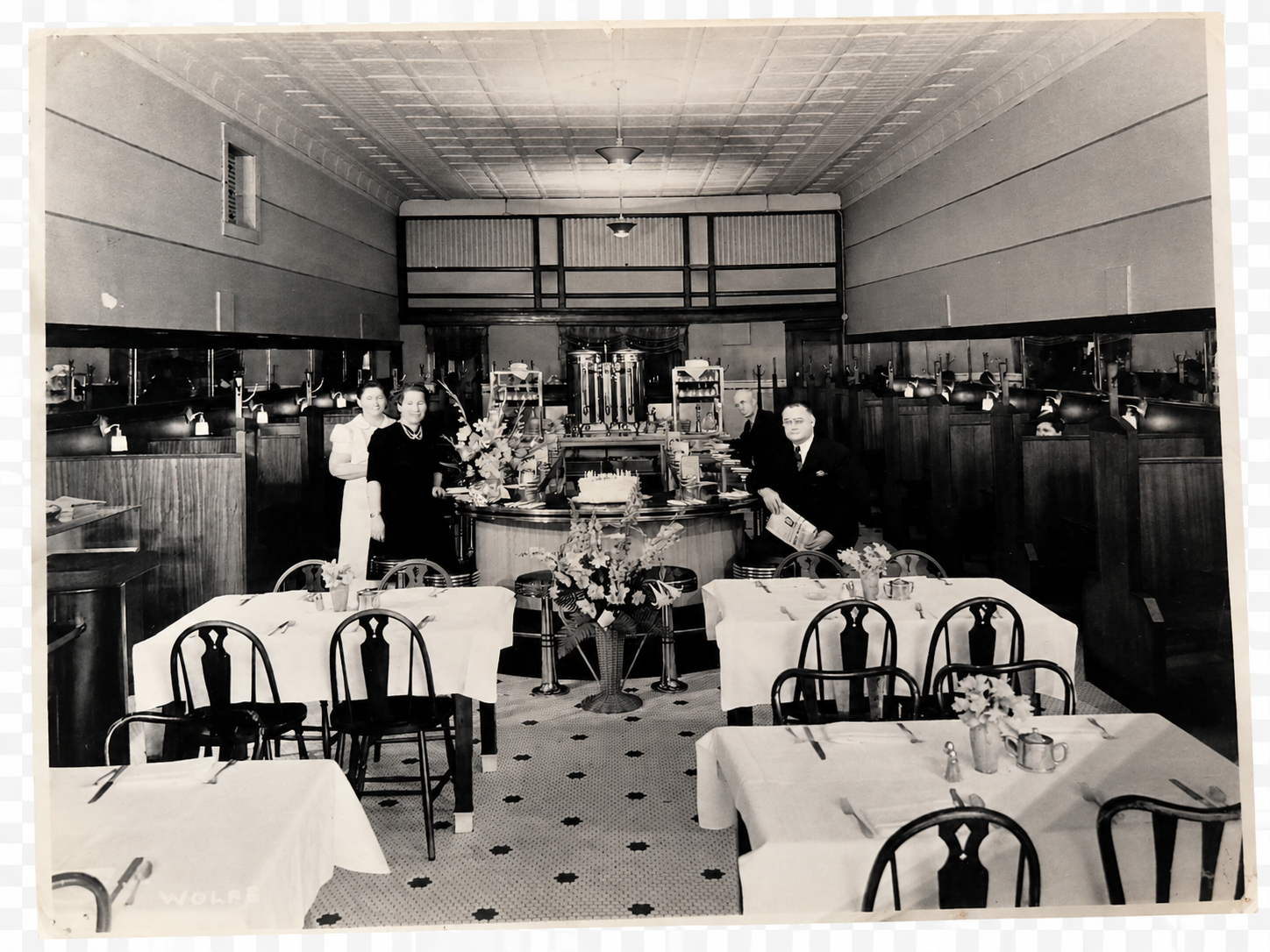
Inside the Cremerie — Linen-topped tables, bentwood chairs, the long counter and gleaming coffee urns — staff posed by the cake stand.

Minnie B. Downs lived nearly a century of Kansas history. Born around 1908 in Cherokee County, she came of age in the shadow of the Tri-State mining district, left Southeast Kansas with her older sister Ethel, and built an independent working life in Topeka. Together, the Downs sisters became inseparable partners in life and business, eventually serving as the final proprietors of The Cremerie Restaurant at 726 Kansas Avenue.

The Cremerie was not simply a place to eat. Opened in 1891, it became one of downtown Topeka’s civic gathering places — a restaurant of coffee, pie, regulars, lawyers, writers, politicians, workers, and memory. When Minnie and Ethel closed its doors on March 17, 1958, they were closing a nearly 67-year chapter of Topeka life.

From the archive — the café at a glance
Address726 Kansas Avenue
OpenedJune 9, 1891
ClosedMarch 17, 1958
Final ProprietorsMinnie & Ethel Downs
Remembered forCoffee · Pie · Civic Memory
Curator’s Note on Sources

This page is adapted from a compiled archival research report using obituary records, cemetery records, city directories, newspaper clippings, property records, genealogy indexes, and Kansas historical collections. Claims are preserved with their original confidence levels where useful.

ConfirmedStrongly SupportedProbableNeeds Verification
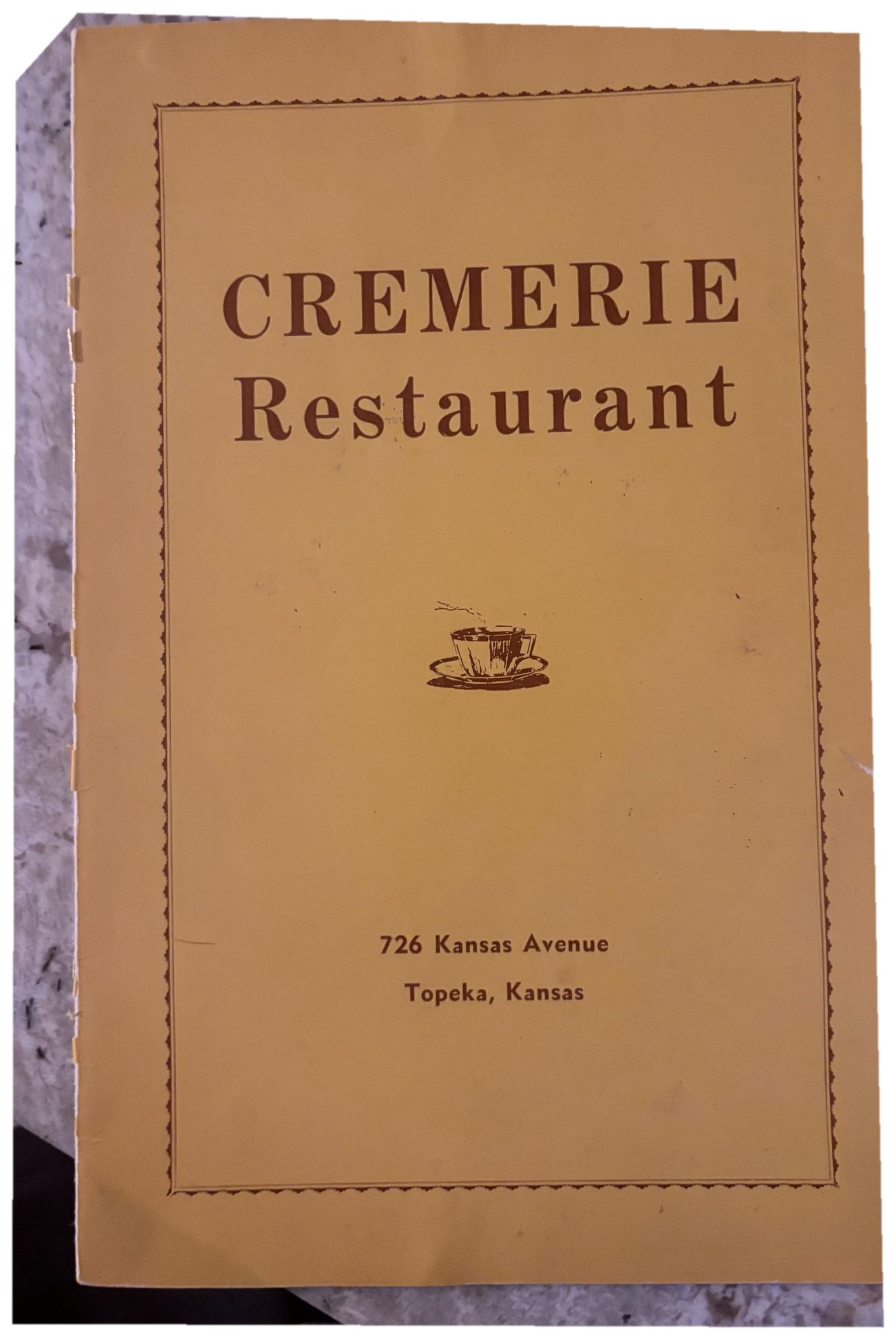
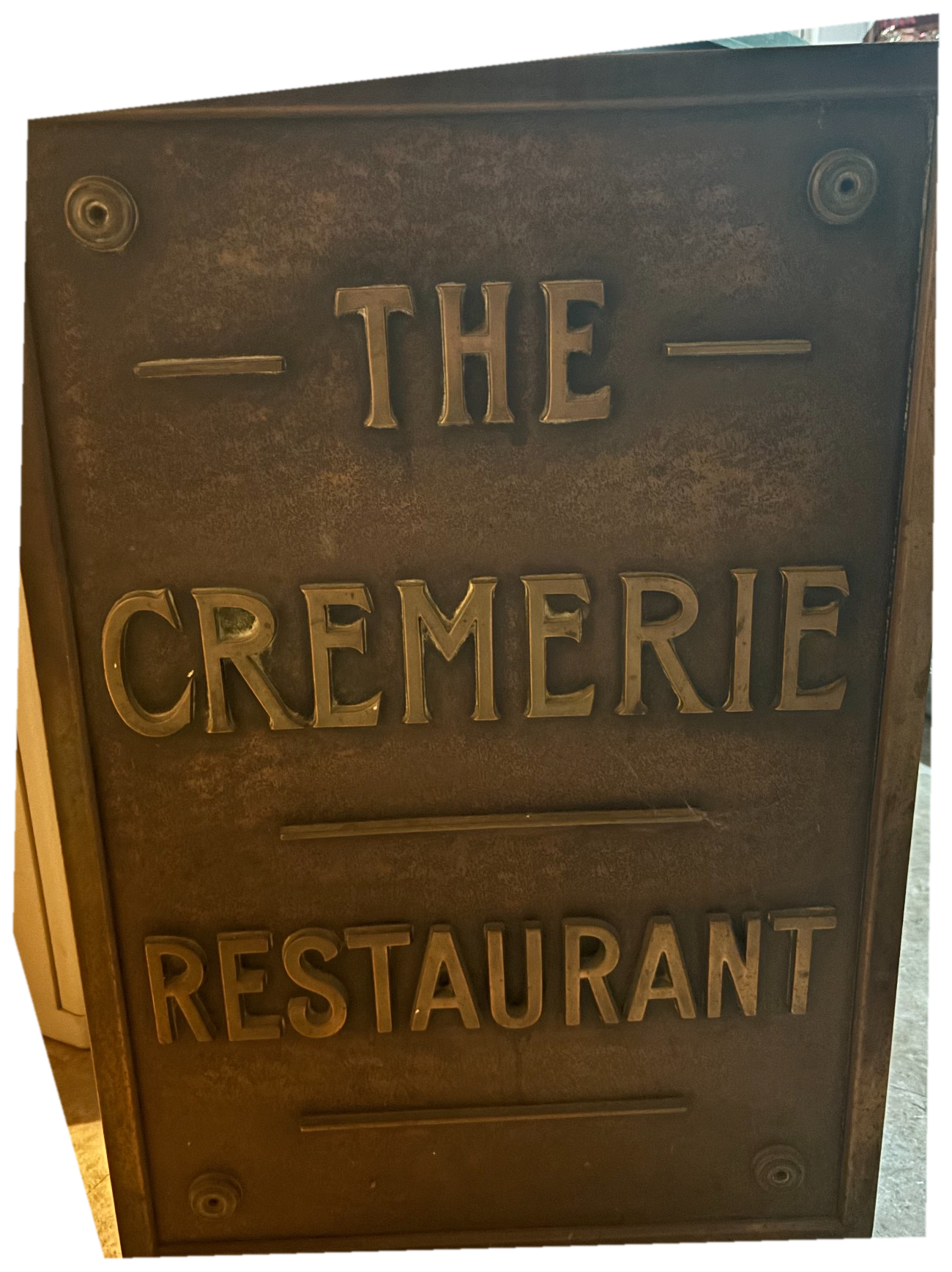
The Cremerie Restaurant sign
The Cremerie Restaurant. The café's cast-brass sign, preserved in the family.
A Life Rooted in Kansas

A Life Rooted in Kansas

Minnie B. Downs was born around 1908 in Cherokee County, Kansas, during a difficult period for her family. Her father, James Monroe Downs, died in 1908, the approximate year of her birth, leaving her mother, Isabella C. “China Belle” Cook Downs, to raise a large family as a widow. The Downs family was tied to the Southeast Kansas communities of Columbus, Scammon, and Galena, with regional connections into Webb City and Carthage, Missouri.

At the turn of the twentieth century, Cherokee County sat within the rough industrial world of the Tri-State Mining District. Coal, lead, and zinc shaped the economy and the risks of daily life. In that environment, the Downs children grew up around hard work, instability, self-reliance, and family loyalty.

Minnie’s closest lifelong companion was her older sister, Ethel C. Downs, born in 1900. Their bond became the defining partnership of Minnie’s life. The two sisters remained unmarried, lived together, worked together, retired together, and built an independent life that did not follow the ordinary expectations placed on women of their generation.

From Mining Country to the Capital City

From Mining Country to the Capital City

The precise year Minnie and Ethel moved from Southeast Kansas to Topeka still requires census verification, but the move reflects a broader pattern of the era. Young women from rural and industrial regions often left home for cities where they could find steady wage work, independence, and opportunity.

By 1956, documentation definitively places both Minnie and Ethel in Topeka through the obituary of their older brother, Charlie Thomas Downs. By then, the sisters were already established in the city and deeply connected to The Cremerie Restaurant.

In Topeka, Minnie and Ethel entered the world of downtown food service. Over time, they became indispensable to The Cremerie’s operation. They were not merely employees passing through. They became part of the restaurant’s institutional memory, then its managers and final custodians.

The Café at 726 Kansas Avenue

The Café at 726 Kansas Avenue

The Cremerie Restaurant opened on June 9, 1891, at 726 Kansas Avenue in Topeka, Kansas. The late nineteenth-century “cremerie” or dairy-lunch concept offered fast, clean, quality meals to downtown workers, clerks, officials, and professionals who needed a dependable noonday meal.

The restaurant passed through several ownership eras. It began with Young and Danley, followed by Knipps and Crocker, then the Scott family — Levi Scott, Clarence L. Scott, and Irvin Scott. A 1903 Topeka city directory lists “Cremerie, The, restaurant, C. L. Scott, propr., 726 Kansas avenue,” anchoring the business firmly in Topeka’s downtown record.

Under the Scotts, The Cremerie became more than a restaurant. It became a civic room. Lawyers, political figures, writers, workers, and regular patrons gathered there. It was tied to Eugene Fitch Ware, the Kansas attorney, politician, and poet known as “Ironquill,” whose verse helped fold the café into local memory.

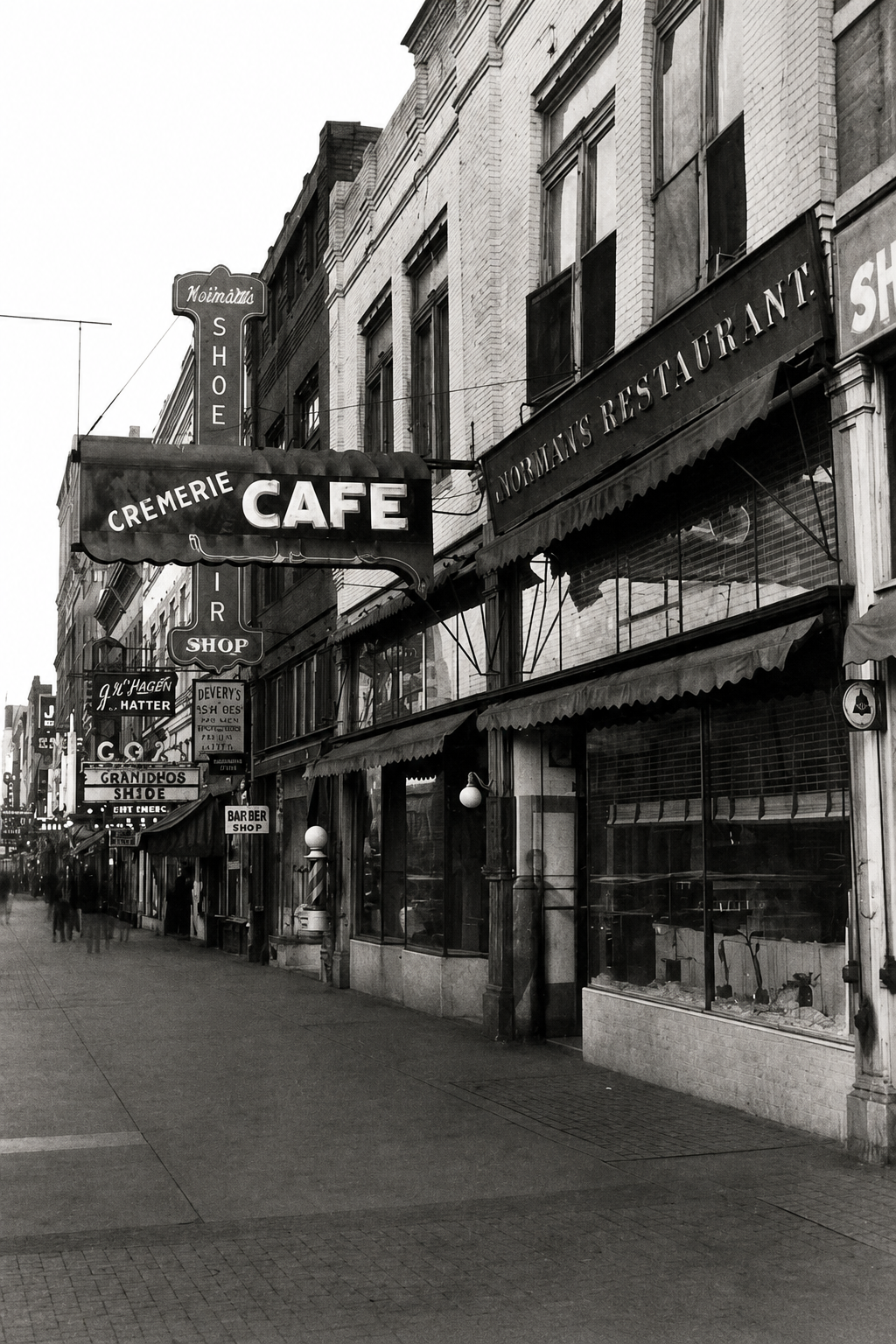
The Cremerie on Kansas Avenue
Kansas Avenue frontage. The Cremerie Café sign at 726 Kansas Avenue, set among the storefronts, shop signs, and sidewalks of downtown Topeka. The Cremerie was not just a family memory. It was a visible piece of downtown Topeka — a sign over the sidewalk, a lunch counter behind the windows, and a place people knew by name.

Once I was poor as poor can be,
I did not eat at the Cremerie,
But now I’m fly and take my pie
With Scott & Scott at the Cremerie.

Attributed to Eugene Fitch Ware, known as “Ironquill”
Fire on Kansas Avenue

Fire on Kansas Avenue

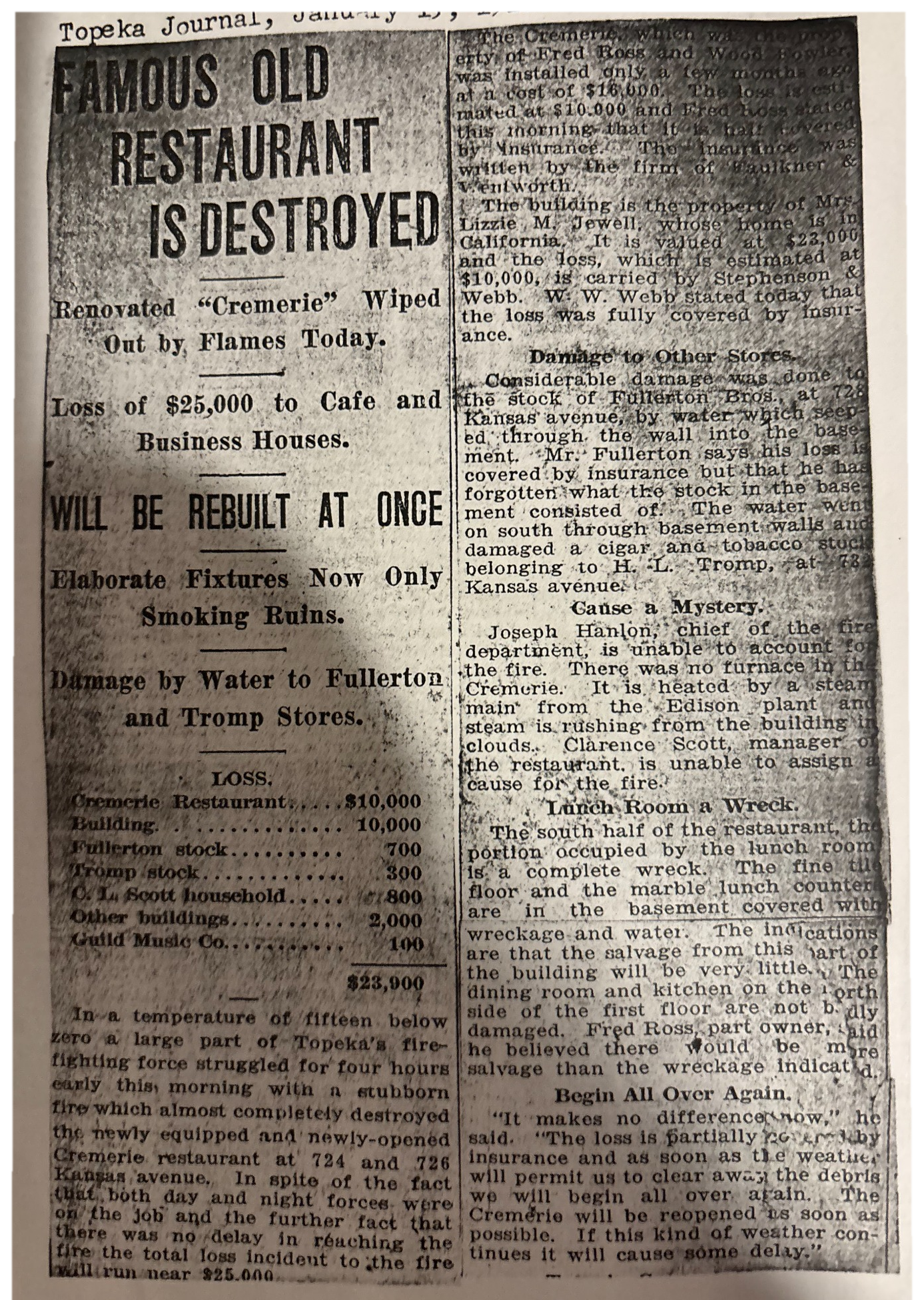
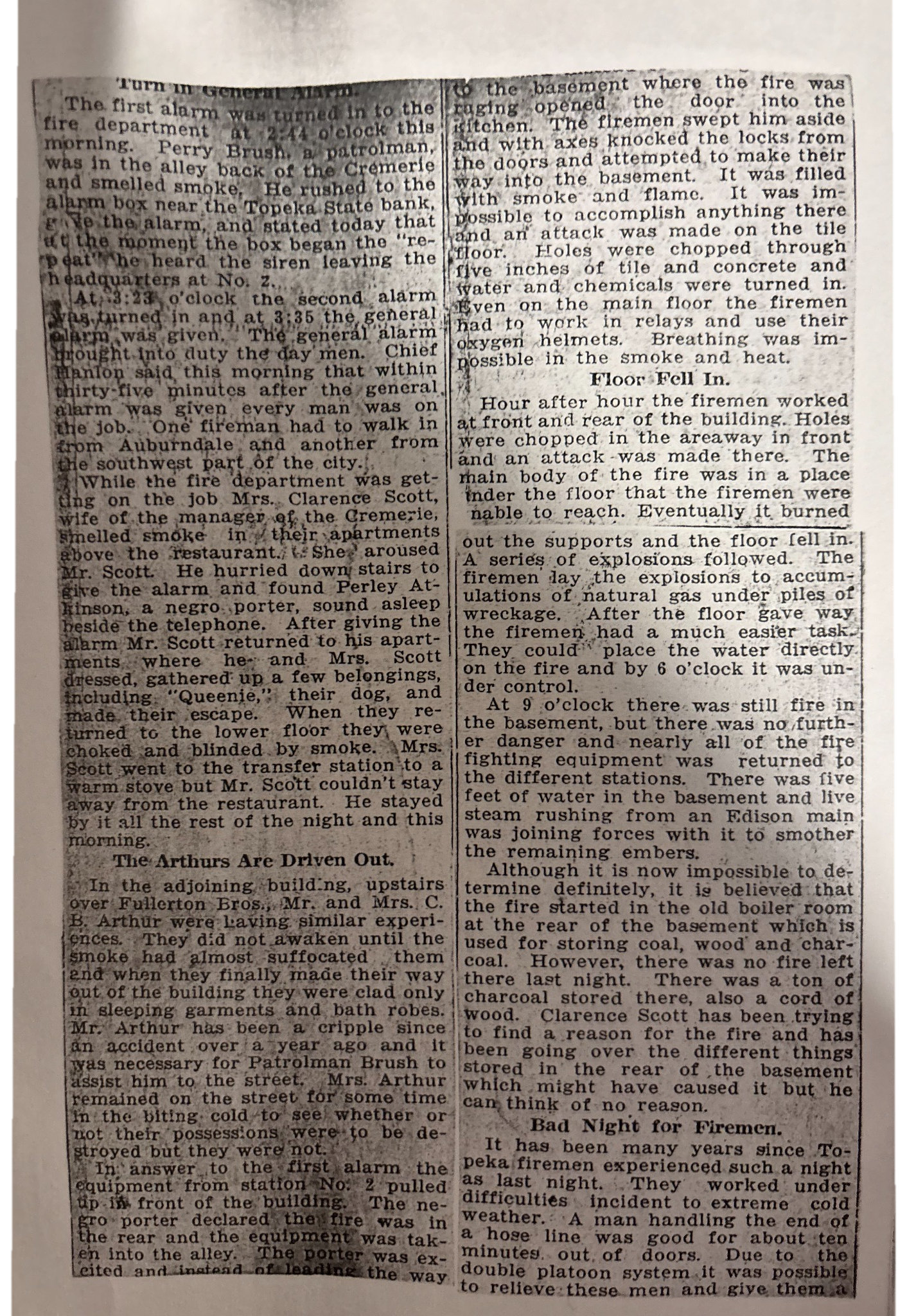
On January 13, 1916, The Cremerie was destroyed by a major fire at 724 and 726 Kansas Avenue. Newspaper accounts described a catastrophic winter blaze intensified by natural gas explosions in the basement and freezing conditions that made firefighting especially difficult.

The reported loss was approximately $25,000, a major sum for the time. The fire damaged neighboring businesses, including Fullerton Brothers and Tromp, and forced the restaurant into a period of rebuilding. Clarence Scott and his wife escaped the flames and reportedly rescued their dog, Queenie.

The restaurant’s return after the fire matters. The Cremerie was rebuilt because it was valuable not only as a business, but as a downtown institution. Its survival became part of its legend.

Pie, Coffee, and Civic Memory

Pie, Coffee, and Civic Memory

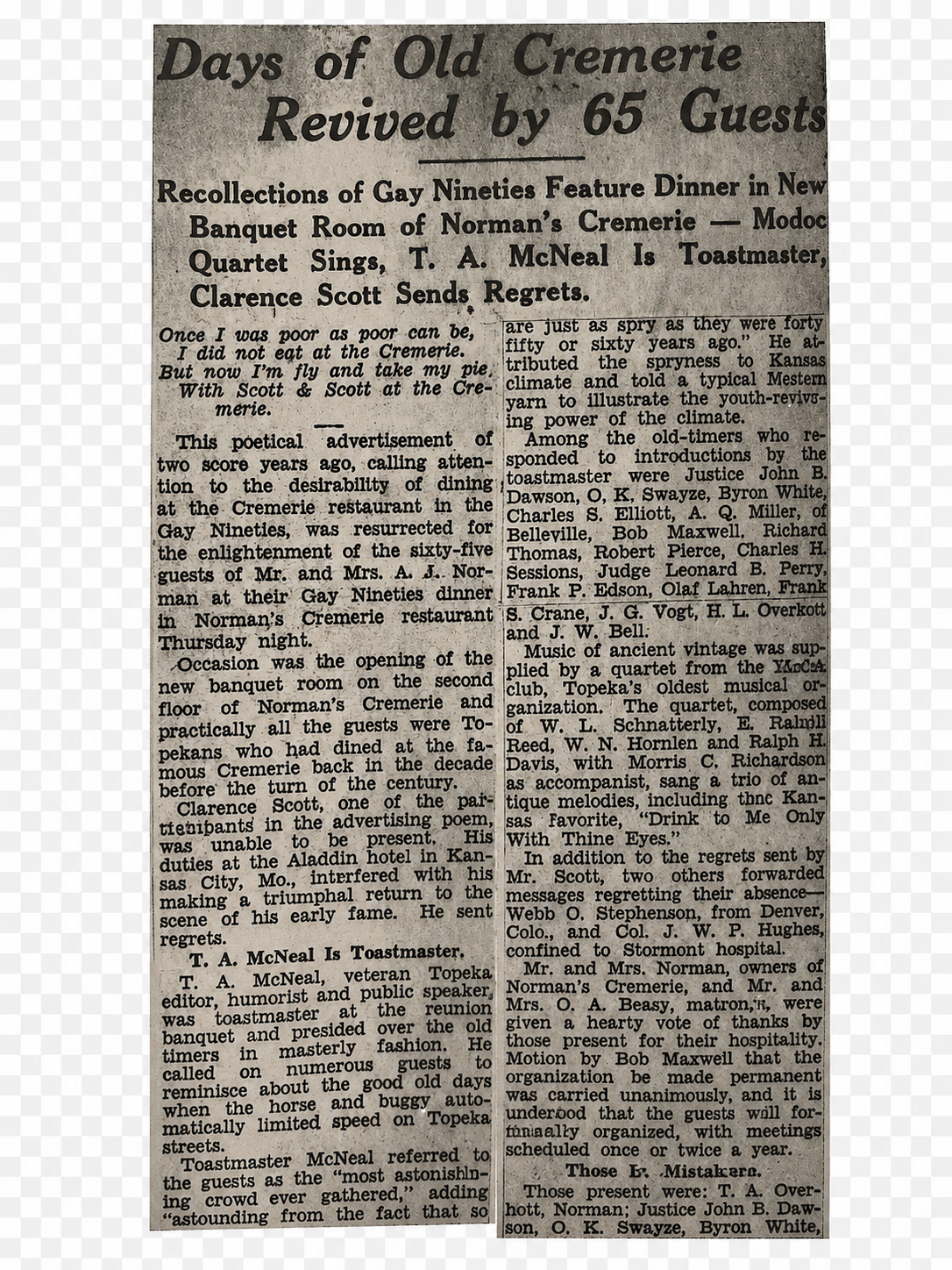
Gay Nineties dinner article
“Days of Old Cremerie Revived by 65 Guests.” A Gay Nineties dinner in the new banquet room of Norman’s Cremerie, with the Modoc Quartet and T. A. McNeal as toastmaster.
❖ Norman’s Cremerie ❧

Days of Old Cremerie

A “Gay Nineties” Dinner · c. 1935–1937

By the mid-1930s, The Cremerie had operated long enough to become a site of Topeka nostalgia. A newspaper clipping, likely from the Topeka State Journalbetween 1935 and 1937, describes a “Days of Old Cremerie” revival dinner attended by sixty-five guests.

The event looked back to the “Gay Nineties,” the decade of the restaurant’s founding. T. A. McNeal served as toastmaster. The Modoc Quartet performed. Clarence Scott, then living in Kansas City, sent regrets from the Aladdin Hotel. Eugene Ware’s poetry was recited, further showing how deeply the restaurant’s identity was tied to Topeka’s older civic culture.

The Vogt Era

The Vogt Era

After the Scott family era, The Cremerie passed to J. G. Vogt, sometimes recorded in clippings and regional references as G. Vogt, Jake Vogt, or Voigt. Future research should carefully distinguish J. G. Vogt of The Cremerie from the Voigt Brothers, William Albert and John Theodore Voigt, who operated a separate wholesale and retail baking business at 1121 East Sixth Avenue in Topeka.

Minnie and Ethel worked through the Vogt era and became deeply familiar with the restaurant’s daily rhythms. When Vogt died or left the business around the mid-1950s, the sisters acquired or assumed full proprietorship. The exact legal mechanism still needs probate or business-record verification, but the newspaper record strongly supports their role as the final proprietors.

The Final Proprietors

The Final Proprietors

For Minnie and Ethel Downs to become the final proprietors of one of Topeka’s oldest and most culturally recognized restaurants was a significant achievement. They came from working-class Southeast Kansas roots, remained unmarried, and built their lives through labor, trust, competence, and endurance.

In the 1950s Midwest, female business ownership — especially ownership of a high-volume downtown restaurant — was not ordinary. The Downs sisters’ leadership represented practical authority earned over years of work. They knew the business from the inside. They knew the customers, the pace, the food, the standards, and the burden of keeping a beloved place alive.

They were not simply running a café. They were stewarding a Topeka institution.

March 17, 1958

March 17, 1958

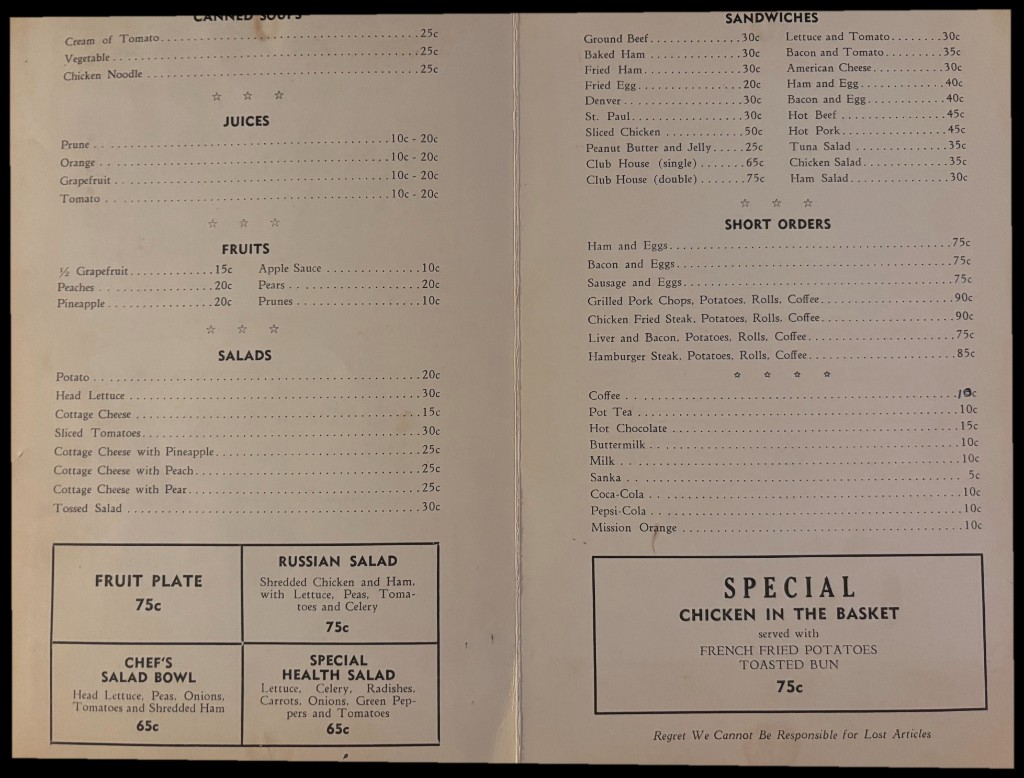
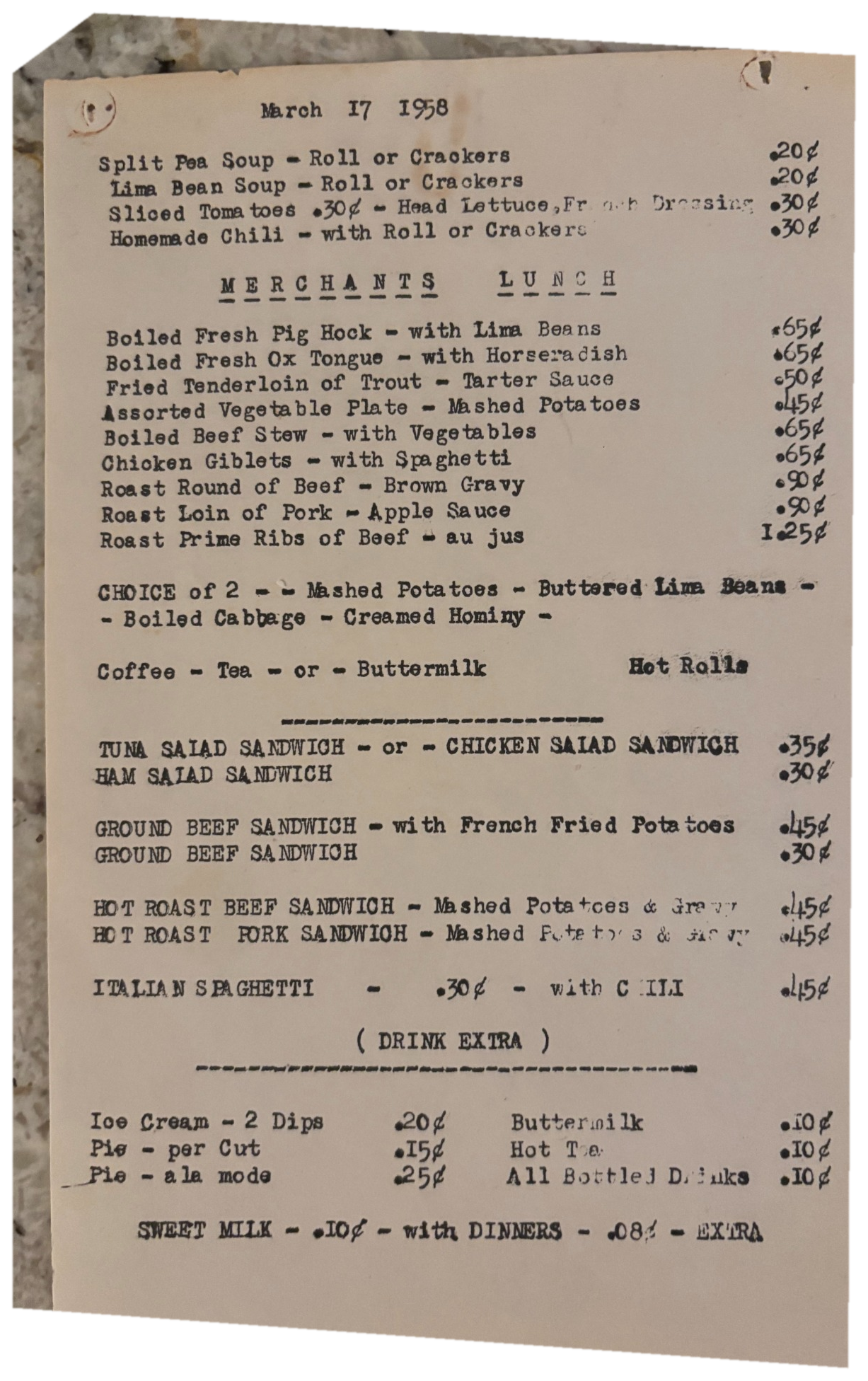
1958 lunch menu
Final menu. The 1958 lunch menu — a record of The Cremerie's last days.

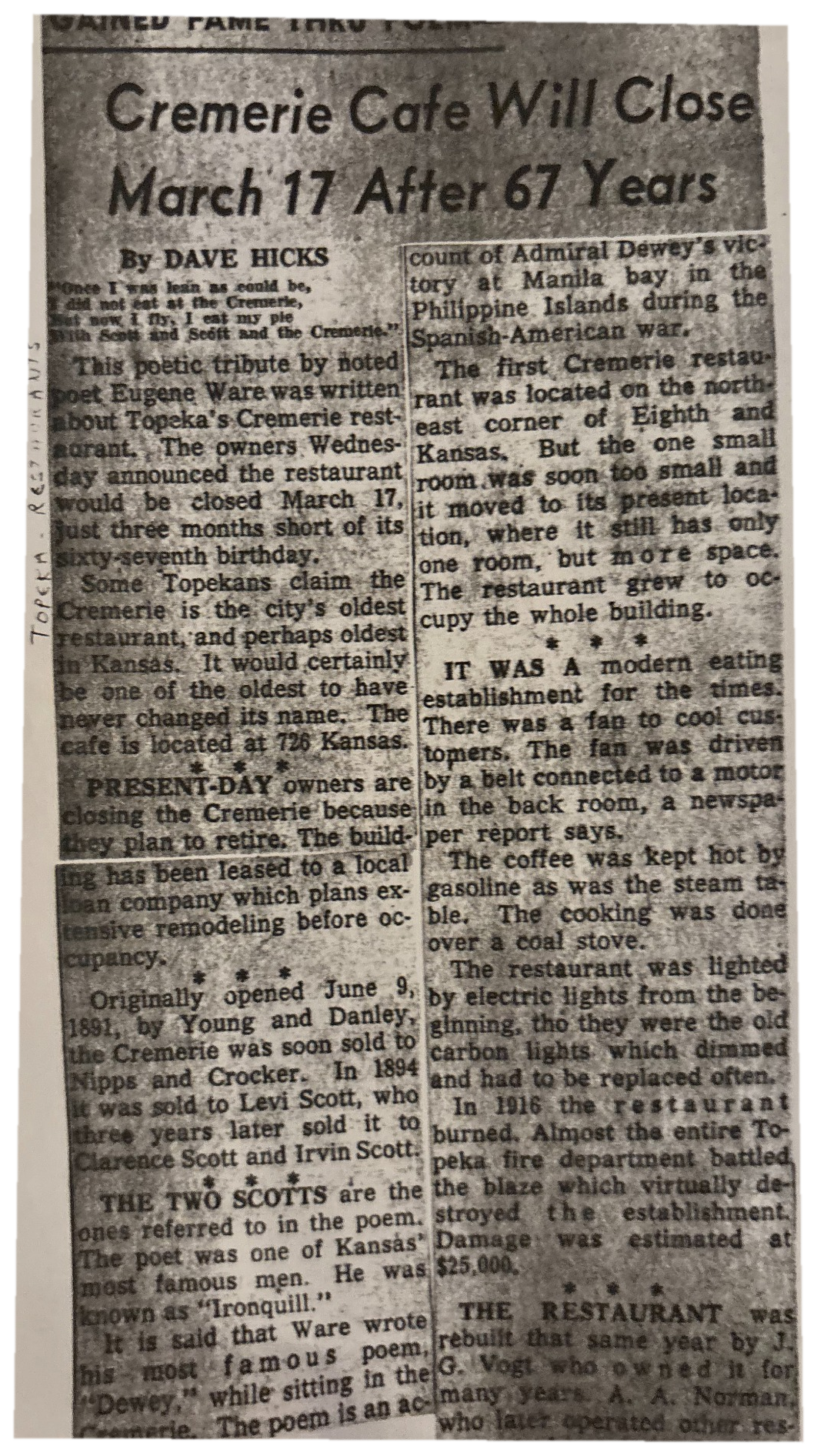
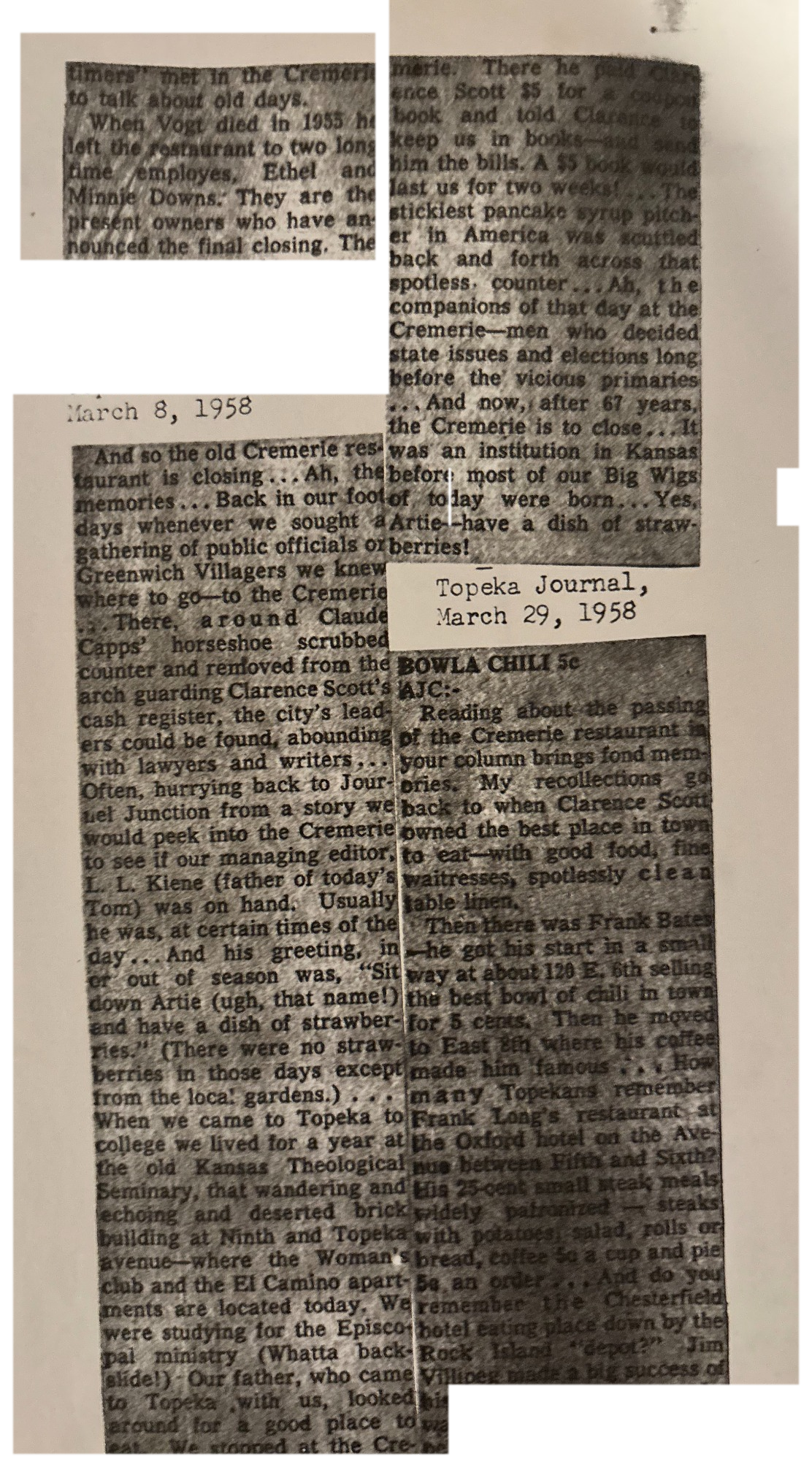
On March 8, 1958, Topeka Journal reporter Dave Hicks announced that The Cremerie would close permanently on March 17, 1958. The closure came just three months short of the restaurant’s sixty-seventh anniversary.

The decision reflected a changing downtown world. Postwar suburbanization, shifting lunch habits, the rise of faster dining formats, and the changing economics of downtown restaurants made it difficult for a traditional café to continue.

A reflective column published on March 29, 1958, treated the closure as the end of an era. The writer remembered the regulars, the old cash register, the strawberry pie, the lawyers, the writers, the politicians, and the people who had made the restaurant part of Topeka’s daily life.

Minnie and Ethel closed The Cremerie on their own terms, preserving its dignity rather than allowing it to fade.

A Kansas Timeline

A Kansas Timeline

1859
Birth of James Monroe Downs, Minnie’s father.
Confirmed
1869
Birth of Isabella C. “China Belle” Cook Downs, Minnie’s mother.
Confirmed
1891June 9
The Cremerie Restaurant opens under Young and Danley.
Confirmed
1898Feb 24
Charlie Thomas Downs is born in Madison County, Missouri.
Confirmed
1900
Ethel C. Downs is born in Kansas.
Confirmed
1903
Polk’s Topeka City Directory lists The Cremerie at 726 Kansas Avenue under C. L. Scott.
Confirmed
1908c.
Minnie B. Downs is born in Cherokee County, Kansas.
Confirmed
1908
James Monroe Downs dies in Columbus, Kansas.
Confirmed
1916Jan 13
The Cremerie is destroyed by a major fire and later rebuilt.
Confirmed
1935
China Belle Cook Downs dies in Cherokee County.
Confirmed
1935–37
A “Days of Old Cremerie” / “Gay Nineties” dinner is held at Norman’s Cremerie.
Probable
1955c.
J. G. Vogt’s death or departure leads to the Downs sisters’ full ownership.
Strongly Supported
1956Feb 1
Charlie T. Downs dies; his obituary places Minnie and Ethel in Topeka.
Confirmed
1958Mar 8
Dave Hicks reports the coming closure of The Cremerie.
Confirmed
1958Mar 17
The Cremerie officially closes.
Confirmed
1958Mar 29
A reflective Topeka Journal column mourns the closing.
Confirmed
1960
The home at 350 Lakeshore Drive, Lake Wabaunsee, is built.
Strongly Supported
1994
Ethel C. Downs dies.
Confirmed
1997–98c.
Minnie’s 90th birthday open house is remembered in family / community tradition.
Needs Verification
2007Mar 27
Minnie B. Downs dies at age 99 in Olathe, Kansas.
Confirmed
2007Mar 30
Minnie is buried at Columbus Cemetery.
Confirmed
Family Roots

Family Roots

Minnie’s father was James Monroe Downs, born in 1859 and deceased in 1908. Her mother was Isabella C. “China Belle” Cook Downs, born in 1869 and deceased in 1935. China Belle raised the family after James’s death, carrying the burden of widowhood in a difficult industrial region.

The Downs family was rooted in Cherokee County, especially around Columbus, Scammon, and Galena. The family’s story also touches nearby Missouri communities including Webb City and Carthage.

NameBornDiedNotesSource
Mary Francis Downs Fouts18961931Older sister; died relatively young.Confirmed
Charlie Thomas Downs18981956Born in Madison County, Missouri. His obituary is a crucial record linking Minnie and Ethel to Topeka.Confirmed
Ethel C. Downs19001994Minnie’s lifelong companion, co-proprietor, and primary personal partner in daily life.Confirmed
Minnie B. Downsc. 19082007Subject of the page; final proprietor of The Cremerie with Ethel.Confirmed
Bill DownsUnknownUnknownListed as a surviving brother in 1956, residing in Brawley, California.Confirmed
Ralph DownsUnknownUnknownListed as a surviving brother in 1956, residing in Brawley, California.Confirmed
James DownsUnknownUnknownListed as a surviving brother in 1956, residing in Columbus, Kansas.Confirmed
Ed DownsUnknownUnknownListed as a surviving brother in 1956, residing in Columbus, Kansas.Confirmed
Mary Francis Downs Fouts
18961931
Older sister; died relatively young.
Confirmed
Charlie Thomas Downs
18981956
Born in Madison County, Missouri. His obituary is a crucial record linking Minnie and Ethel to Topeka.
Confirmed
Ethel C. Downs
19001994
Minnie’s lifelong companion, co-proprietor, and primary personal partner in daily life.
Confirmed
Minnie B. Downs
c. 19082007
Subject of the page; final proprietor of The Cremerie with Ethel.
Confirmed
Bill Downs
UnknownUnknown
Listed as a surviving brother in 1956, residing in Brawley, California.
Confirmed
Ralph Downs
UnknownUnknown
Listed as a surviving brother in 1956, residing in Brawley, California.
Confirmed
James Downs
UnknownUnknown
Listed as a surviving brother in 1956, residing in Columbus, Kansas.
Confirmed
Ed Downs
UnknownUnknown
Listed as a surviving brother in 1956, residing in Columbus, Kansas.
Confirmed

The family’s burial patterns show a lasting connection to Cherokee County. James M. Downs, China Belle Downs, Charlie Downs, and Ethel Downs are associated with Lone Elm Cemetery in Columbus. Minnie B. Downs was buried at Columbus Cemetery — a distinction future family researchers should preserve carefully.

The Lake Years

The Lake Years

After closing The Cremerie, Minnie and Ethel retired to Lake Wabaunsee in the Flint Hills. Public property and tax records identify 350 Lakeshore Drive, Alma, Kansas, as a single-family residence built in 1960. The timing strongly aligns with the sisters’ post-Cremerie retirement.

Lake Wabaunsee itself carries a layered history. Created in the late 1930s by the Works Progress Administration, the lake later became connected to World War II history before developing into a quiet recreational and residential community.

For Minnie and Ethel, the lake represented a new chapter after decades of downtown restaurant life. They moved from the pace of Kansas Avenue to the slower rhythm of the Flint Hills. Minnie remained connected to the lake community for decades. A remembered 90th birthday open house around 1997 or 1998 still needs newspaper verification, likely through the Alma Signal-Enterprise or Wabaunsee County historical archives.

A Nearly Century-Long Life

A Nearly Century-Long Life

Ethel Downs died in 1994, ending a lifelong sisterly partnership that had lasted for more than eighty years. Minnie continued on, carrying the memory of their family, their work, their restaurant, and their lake years.

In her final years, Minnie moved from Lake Wabaunsee to a specialized care center in Olathe, Kansas. She died on March 27, 2007, at the age of 99. Her graveside service and burial took place at Columbus Cemetery on March 30, 2007, returning her to Cherokee County, the region where her life had begun.

The Story Preserved

The Story Preserved

Minnie B. Downs lived a life defined by quiet resilience, unshakeable sisterly devotion, and a formidable work ethic that carried her through nearly a century of profound American change. Born around 1908 in the rugged, heavy-industrial region of Cherokee County, Kansas, Minnie’s life began against a backdrop of both physical and economic hardship. The Tri-State mining district was unforgiving, and her arrival coincided with a devastating familial loss: her father, James Monroe Downs, died the very year she was born. Raised by her widowed mother, China Belle, Minnie and her siblings learned early the supreme value of self-reliance and the absolute necessity of family loyalty.

As the twentieth century progressed and the world modernized, Minnie and her older sister, Ethel, made a bold, independent decision. Leaving the scarred landscapes of the mining towns behind, the two unmarried sisters set out for the bustling state capital of Topeka to forge their own destinies. There, they found employment at a local institution that would define their lives: The Cremerie Restaurant at 726 Kansas Avenue.

The Cremerie was far more than just a place to eat; it was the vibrant, caffeinated heartbeat of downtown Topeka. First opened in 1891, the restaurant had miraculously survived a devastating winter fire in 1916 and weathered the darkest days of the Great Depression. It was a storied place where famous statesmen and poets like Eugene “Ironquill” Ware ate pumpkin pie, and where generations of politicians, lawyers, and locals gathered daily to debate the issues of the era over famous strawberry pie and coffee.

For years, Minnie and Ethel dedicated the prime of their lives to this establishment. Their loyalty, grit, and operational competence were so profound that when the owner, J. G. Vogt, passed away in the mid-1950s, the sisters took the helm. In an era when female business ownership — particularly of a high-volume downtown landmark — was a rare and difficult feat, Minnie and Ethel stood as the proud proprietors of Topeka’s oldest restaurant. They ran it with the same grace, cleanliness, and efficiency it had always known, serving as the final custodians of a sixty-seven-year-old Kansas legacy.

Recognizing the changing tides of the modern world, the rise of the suburbs, and the shifting nature of downtown commerce, the sisters made the difficult choice to close The Cremerie on March 17, 1958, going out on their own terms. They retired to the quiet beauty of the Flint Hills, moving into a newly built home on Lakeshore Drive at Lake Wabaunsee. There, Minnie traded the hectic pace and clattering dishes of a downtown kitchen for the peaceful rhythms of lake life.

The sisters remained inseparable until Ethel’s passing in 1994, a loss of an eighty-year partnership. Minnie carried on their shared legacy, celebrating a grand 90th birthday surrounded by an appreciative community of lake friends according to family and community tradition, though the exact clipping remains to be verified. When she finally required advanced care, she relocated to Olathe. Passing away on March 27, 2007, at the remarkable age of 99, she was brought home one last time to Cherokee County. Buried in the Columbus Cemetery, Minnie B. Downs left behind a testament to a full century of Kansas history — a story of hard work, quiet female independence, and a beautiful sisterly bond that weathered every conceivable season.
Evidence & Archive Notes

Evidence & Archive Notes

ObituaryConfirmed

Minnie Downs Obituary

March 2007 · Topeka Capital-Journal / Legacy.com
Confirms: Death date, age 99, Lake Wabaunsee connection, Olathe care center, burial timing.
GenealogyConfirmed / High

Charlie Thomas Downs Obituary / Genealogy Index

1956 · Rootsweb / Missouri death certificate index / Find-a-Grave material
Confirms: Parents, siblings, and Minnie and Ethel living in Topeka by 1956.
DirectoryConfirmed

Polk’s Topeka City Directory

1903 · R. L. Polk & Co. / Internet Archive
Confirms: The Cremerie at 726 Kansas Avenue under C. L. Scott.
NewspaperConfirmed / Primary

“Cremerie Cafe Will Close March 17”

March 8, 1958 · Topeka Journal, by Dave Hicks
Confirms: Closing date, 67-year history, ownership lineage, Downs sisters as final proprietors.
NewspaperConfirmed / Primary

“Famous Old Restaurant Is Destroyed”

January 13, 1916 · Topeka Journal
Confirms: The fire, damage, reported loss, surrounding businesses, the Clarence Scott era.
CollectionConfirmed / Primary

Kansas State Historical Society Collections

1913–1914 and related material
Confirms: Eugene Ware / Ironquill connection and the cultural footprint of The Cremerie.
PropertyStrongly Supported

Property Record: 350 Lakeshore Drive

Modern property data referencing a 1960 build year
Confirms: Lake Wabaunsee residence and build year.
Still to Find

Still to Find

Research Target

Vogt Probate Records

Goal: Determine exactly how Minnie and Ethel acquired The Cremerie from J. G. Vogt.
Where to look: Shawnee County probate or courthouse records.
Research Target

KSHS Photograph Collections

Goal: Identify and date photographs of The Cremerie interior, exterior, or related events.
Where to look: Kansas Memory database and physical clipping volumes.
Research Target

Federal Census Records, 1920–1950

Goal: Track Minnie and Ethel's move from Cherokee County to Topeka and their occupational progression.
Where to look: FamilySearch, National Archives, Ancestry, or census microfilm.